 Leonard Botezatu

What if the future wasn't just uncertain, but predictable? Not through crystal balls or prophecy, but through the rigorous application of science? This is the captivating idea of Psychohistory – saying that humanity's collective future can be predicted. And if it can be predicted, it can be guided, shaped, and harnessed for the betterment of all. I find this concept extremely powerful.
This concept first emerged in the 1950s from the visionary mind of American science fiction master, Isaac Asimov. In his monumental Foundation series, Asimov projected humanity far into the future – a million years hence.

The Galactic Empire and Psychohistory
In this distant era, a vast Galactic Empire spans the entire Milky Way, bringing peace to billions of colonized worlds. Yet, like all empires throughout history, this one is destined to collapse. Asimov's grim projection: this fall would plunge the galaxy into 30,000 years of darkness, wars, and barbarism.
Against this backdrop of impending doom, Asimov's genius protagonist, Hari Seldon, unveiled a radical solution: Psychohistory. This new science posits that human behavior, on a massive scale across vast populations and immense time spans, can be mathematically modeled. By mapping the intricate dance of social, economic, and political forces, Psychohistory aims to uncover the underlying patterns driving societal evolution.
If these patterns exist and can be discerned, then the future course of events becomes, in principle, predictable. And crucially, if predictable, then potentially manipulable – allowing for interventions to steer civilization towards a significantly better outcome, shortening or even averting that long dark age.
From Fiction to Science: Cliodynamics
While Asimov's vision remains firmly in the realm of fiction, the quest to find mathematical regularities in history persists. A modern echo of Psychohistory's ambition is found in the work of historian Peter Turchin and his development of Cliodynamics (combining "Clio," the muse of history, with "dynamics" movement).
Turchin's discipline strives to apply scientific methods and mathematical models to understand the broad patterns and dynamics of historical change, seeking to uncover the deep structures that shape the rise and fall of societies across centuries.

Enter Artificial Intelligence
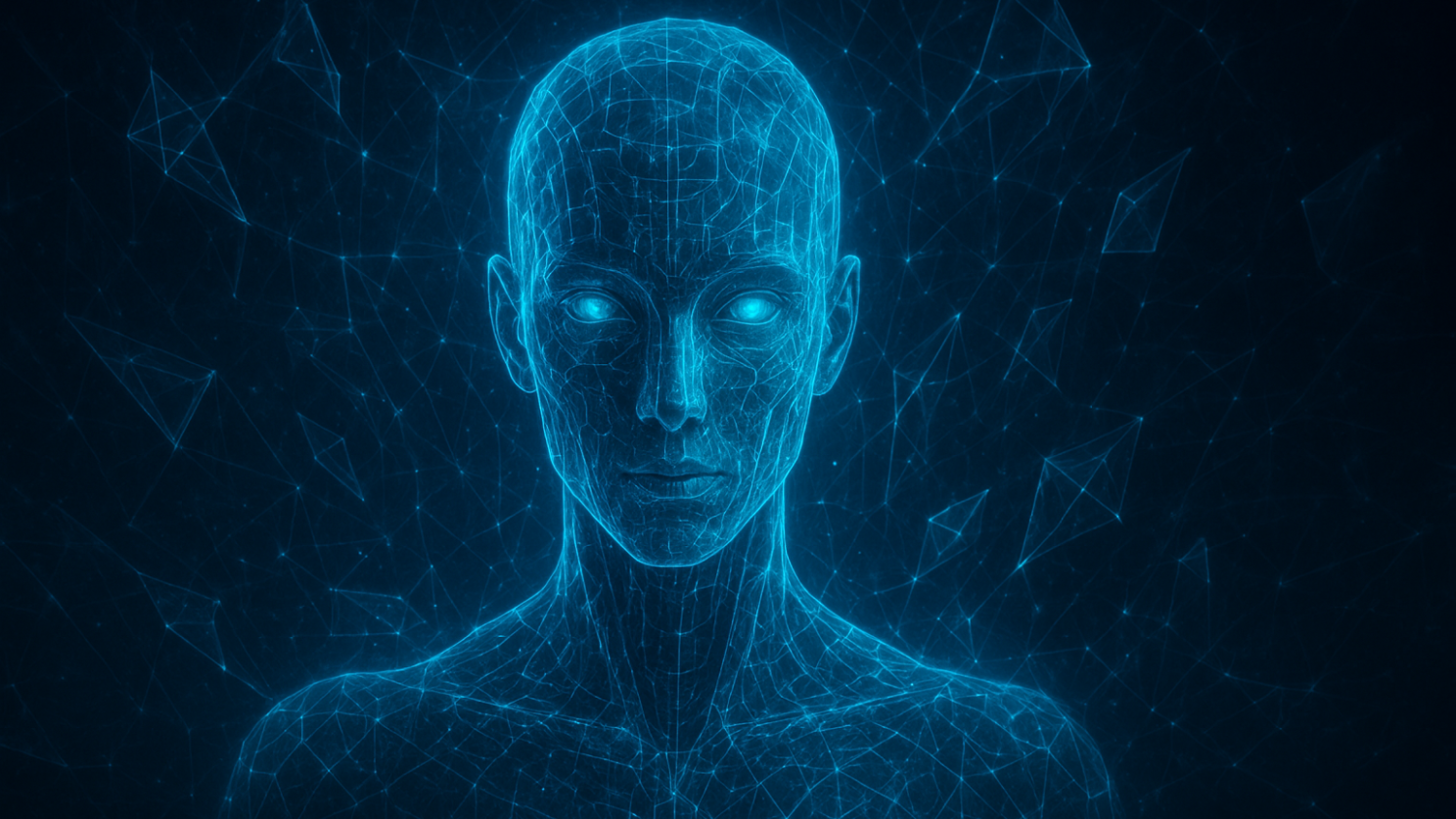
But today, this ambitious concept gains a revolutionary new ally: Artificial Intelligence. Asimov imagined a single genius (Seldon) and his team grappling with the math of human behavior. The future, however, offers something far more powerful: AI systems with access to vast, unprecedented troves of data – real-time global information streams, economic indicators, social media sentiment, environmental data, and historical records on a scale unimaginable to Turchin or Asimov.
This AI, capable of processing and identifying patterns within this colossal, complex data at speeds and depths no human ever could, becomes the ultimate potential engine for prediction.
The Hari Seldon Protocol
Personally, I think AI can be the key that finally unlocks the predictive power hinted at by Psychohistory and Cliodynamics, transforming our ability to foresee and shape the trajectory of humanity itself. I would like to call it: The Hari Seldon Protocol.
Imagine AI systems that can:
- Analyze global economic trends in real-time
- Predict social movements and political shifts
- Identify emerging crises before they escalate
- Model the impact of policy interventions across populations
- Optimize resource allocation for maximum societal benefit
The implications are profound. If we can accurately forecast societal trends and potential crises, we can proactively implement solutions rather than reactively dealing with aftermath. This could revolutionize everything from economic policy to climate action, from public health to conflict prevention.
Ethical Considerations
Of course, with such power comes significant ethical responsibility. Who controls these predictive systems? How do we ensure they serve humanity's best interests rather than narrow agendas? What about privacy, autonomy, and the risk of manipulation?
These are questions we must grapple with as AI capabilities advance. The Hari Seldon Protocol isn't just about prediction – it's about using those predictions wisely and ethically to create a better future for all.
Conclusion
Asimov's vision of Psychohistory captured our imagination because it spoke to a deep human desire: to understand our place in the cosmos and to have agency over our collective destiny. Today, AI brings us closer to making that vision a reality than ever before.
The future may not be entirely predictable, but with AI as our guide, we can certainly navigate it with greater wisdom, foresight, and purpose. The question is not whether we can build such systems, but whether we will use them wisely.